10. Upcycled Milk Crate Hideaway
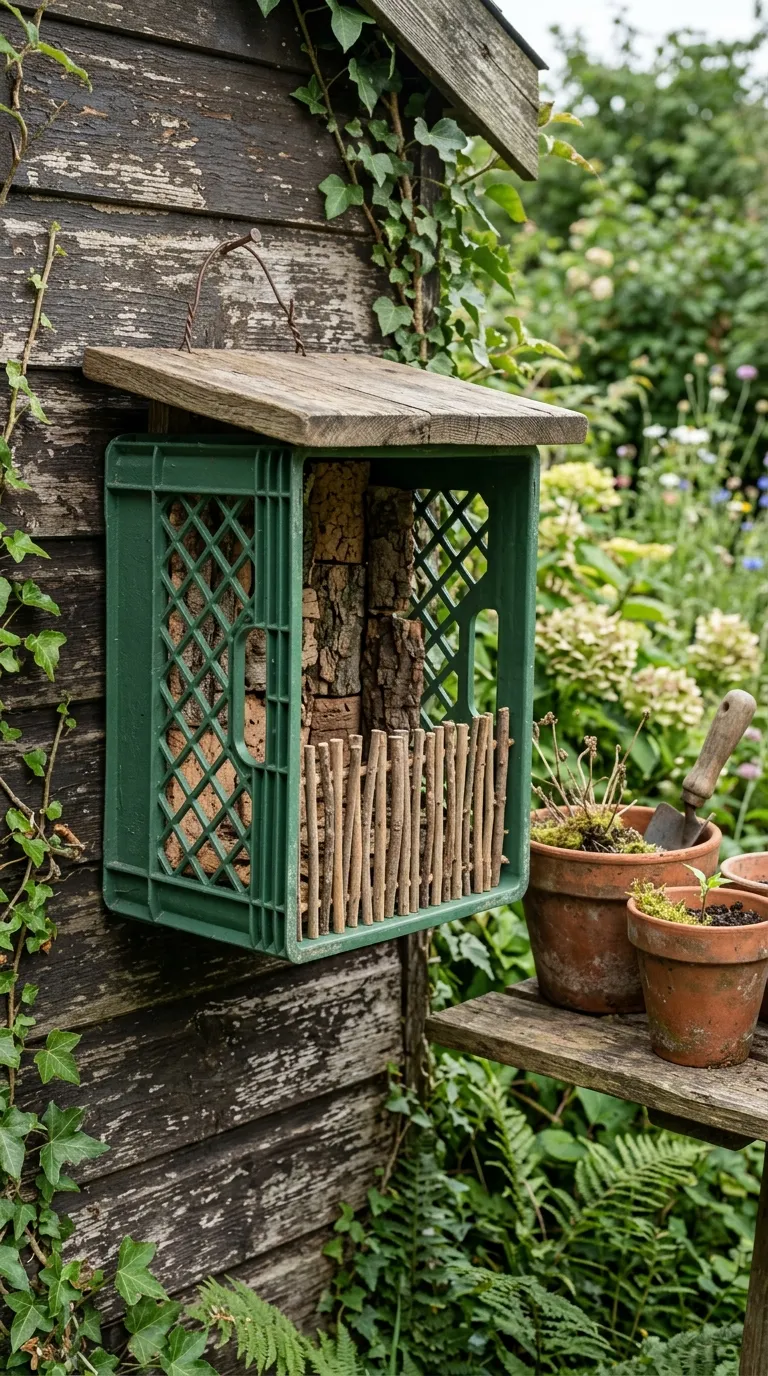
A plastic milk crate isn’t the most romantic material, but it makes a surprisingly effective and long-lasting shelter, especially for damp climates. The lattice structure already provides gaps.
Materials: a milk crate, matte spray paint in a natural tone, cork sheeting or bark, jute twine, and a wooden roof board. Turn the crate on its side and line the back and floor with cork or bark. Weave a few thin wood strips through the lattice to narrow the openings to roughly ⅜ inch.
Paint the exterior in a muted green or brown so it recedes into foliage, and give it a wooden roof for rain protection. Hang it on a shed wall or set it on a shelf in a potting area.
Time: 40 minutes including paint drying. Difficulty: beginner. This is a good option for renters, since it can be unhooked and moved without leaving marks.
Frequently Asked Questions
Do butterfly houses actually attract butterflies?
They can, but not the way birdhouses attract birds. Butterflies use them mainly for overnight roosting and winter hibernation, so a house with tight slits, rough interior surfaces, and a sheltered location will see far more activity than a decorative box with a wide opening. Placement near nectar plants and native shrubs improves your odds considerably.
Where should I mount a butterfly house?
Choose a spot 4 to 6 feet above the ground with morning sun and protection from strong wind and driving rain. Fence posts, shed walls, and tree trunks work well. Face the entry south or southeast in most climates so the interior warms early in the day.
What size should the entry slits be?
Aim for roughly ⅜ inch wide and three to four inches tall. Vertical orientation matters more than exact dimensions. Slits that are too wide let in rain and predators, while openings that are too narrow keep butterflies out entirely.
Should I put anything inside a butterfly house?
Yes, texture helps. Bark strips, cork sheeting, or rough-cut wood slats give butterflies something to grip. Some gardeners add a small piece of dried moss for insulation. Avoid cotton batting or fabric, which holds moisture and can grow mold.
When are butterflies most likely to use a house?
Usage peaks on cool nights in late summer and fall, when butterflies need warmth and cover, and again through winter for species that overwinter as adults. You may also see activity during extended rain or windy weather in spring.
How do I clean and maintain a butterfly house?
Once a year in late winter, open the house and brush out debris, old spiderwebs, and any insect casings. Wipe the interior with a dry cloth, never a chemical cleaner, and let it air out before closing it up again. Check mounting screws and the roof after storms.
Can I paint my butterfly house?
You can paint the exterior, and muted earth tones blend better with a garden than bright colors. Keep the interior unfinished and unpainted. Whatever you apply outside, let it cure completely, ideally for a week or more, before hanging the house where butterflies will encounter it.
There’s something quietly satisfying about building a small shelter for creatures that ask for so little. A butterfly house won’t transform your yard overnight, and it isn’t a substitute for planting nectar flowers, leaving a patch of bare damp soil, and skipping the pesticides. But it adds a layer of habitat that most gardens are missing, and it gives you a reason to linger outside at dusk, watching to see who drifts in.
Start with the build that matches what’s already in your garage. The mason jar version takes less than an hour. The cedar slat box is a good Saturday morning project. Whichever you choose, treat the plans as a starting point rather than a rulebook. Adjust the slit size for the butterflies you see most often, try a different roofline, or stain the exterior with a walnut hull wash you made yourself. Then mount it, wait, and let the garden do the rest.