Butterflies drift through a garden like they own it, and in a way they do. They pollinate the blooms, they signal a healthy patch of green, and they make a warm afternoon feel a little slower and sweeter. What many gardeners don’t realize is that the same butterflies visiting your zinnias and coneflowers need somewhere to sleep, shelter from wind and rain, and hide out through the colder months. That’s where a butterfly house earns its spot on the fence post.
Building one yourself is a satisfying weekend project, and it doesn’t demand a workshop full of power tools. A few scraps of cedar, an old mason jar, a length of bamboo, or a pallet you were about to haul to the curb can all become a functional shelter. The trick is understanding what butterflies actually want: narrow vertical slits, rough natural surfaces to grip, protection from weather, and a spot with dappled sun.
These 10 DIY garden butterfly house ideas for backyards cover a range of styles, budgets, and skill levels, from a half-hour beginner build to a more involved cedar roost box. Pick one that matches the materials you already have, then customize the size, finish, and mounting method to suit your space. Along the way you’ll also find placement advice and small details that make the difference between a decorative object and a shelter butterflies genuinely use.
Quick Answer
A butterfly house is a small wooden or upcycled shelter with narrow vertical entry slits, rough interior surfaces like bark or grooves, and a weatherproof roof, mounted 4 to 6 feet off the ground in a sunny, sheltered spot near nectar plants. Most butterflies use them for overnight roosting and winter hibernation rather than nesting, so placement near flowers, mud puddles, and native shrubs matters more than the design itself.
1. Mason Jar Butterfly House
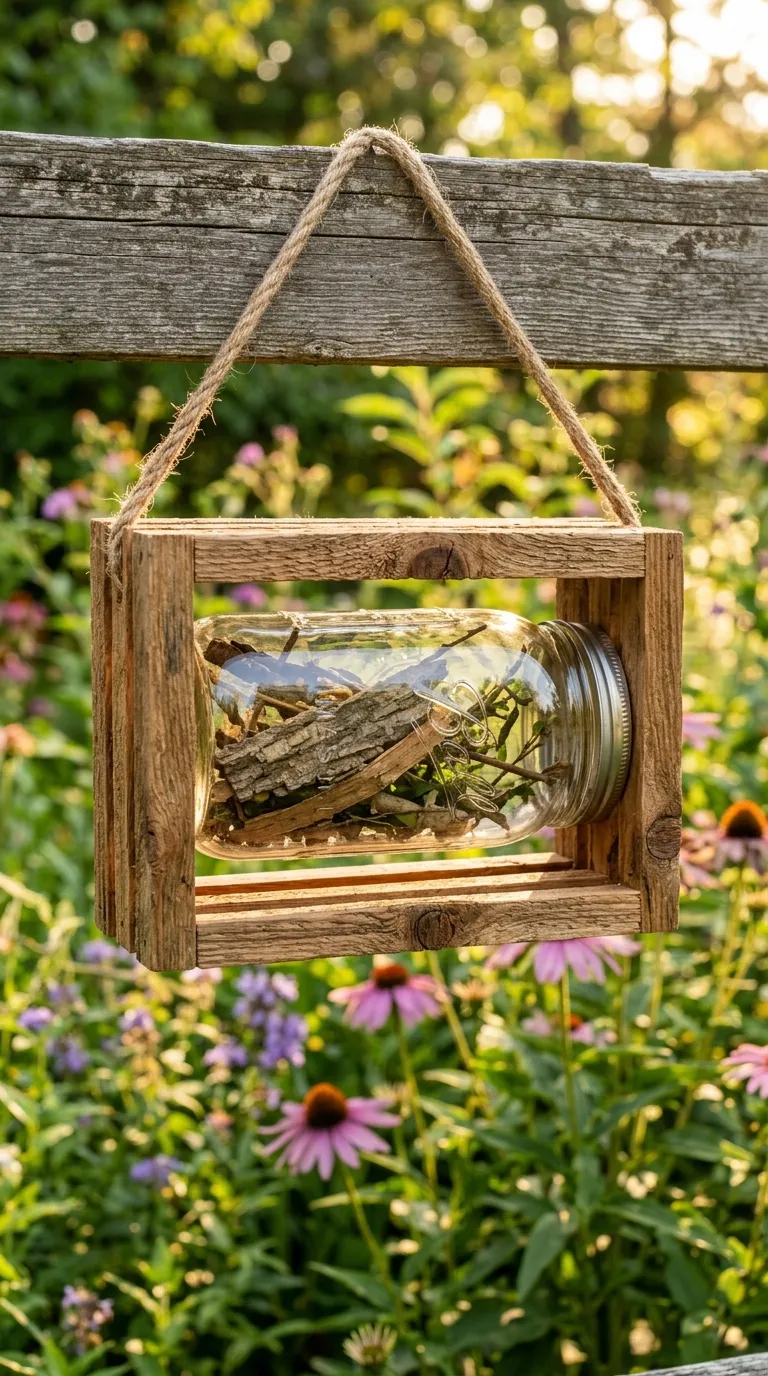
This is the project I recommend to anyone who wants to try a butterfly shelter without committing to a full woodworking session. The concept is straightforward: a wide-mouth mason jar lies on its side inside a slatted wooden frame, and the jar’s opening becomes the entry. The glass holds warmth on cool mornings, which is exactly what a roosting butterfly is looking for.
Materials: one wide-mouth mason jar (quart size works well), cedar or pine scraps cut into four frame sides and a back panel, exterior wood glue, 1¼-inch exterior screws, natural jute twine, fine sandpaper, and a few strips of rough bark or cork. If you’d rather not handle glass outdoors, a food-grade tin can with both ends removed works as an alternative.
Build a shallow open box that the jar nests into, leaving the mouth exposed. Sand every edge so nothing snags a wing. Glue and screw the frame together, then line the inner back with bark strips so butterflies have texture to cling to. Loop twine through two eye hooks at the top for hanging.
Time: about 45 minutes. Difficulty: beginner. Hang it under a porch eave or on a fence rail where it gets morning sun but stays out of driving rain. The glass will fog in humid weather, so check it every few weeks and wipe it dry.