10. Two-Pallet Standing Privacy Planter
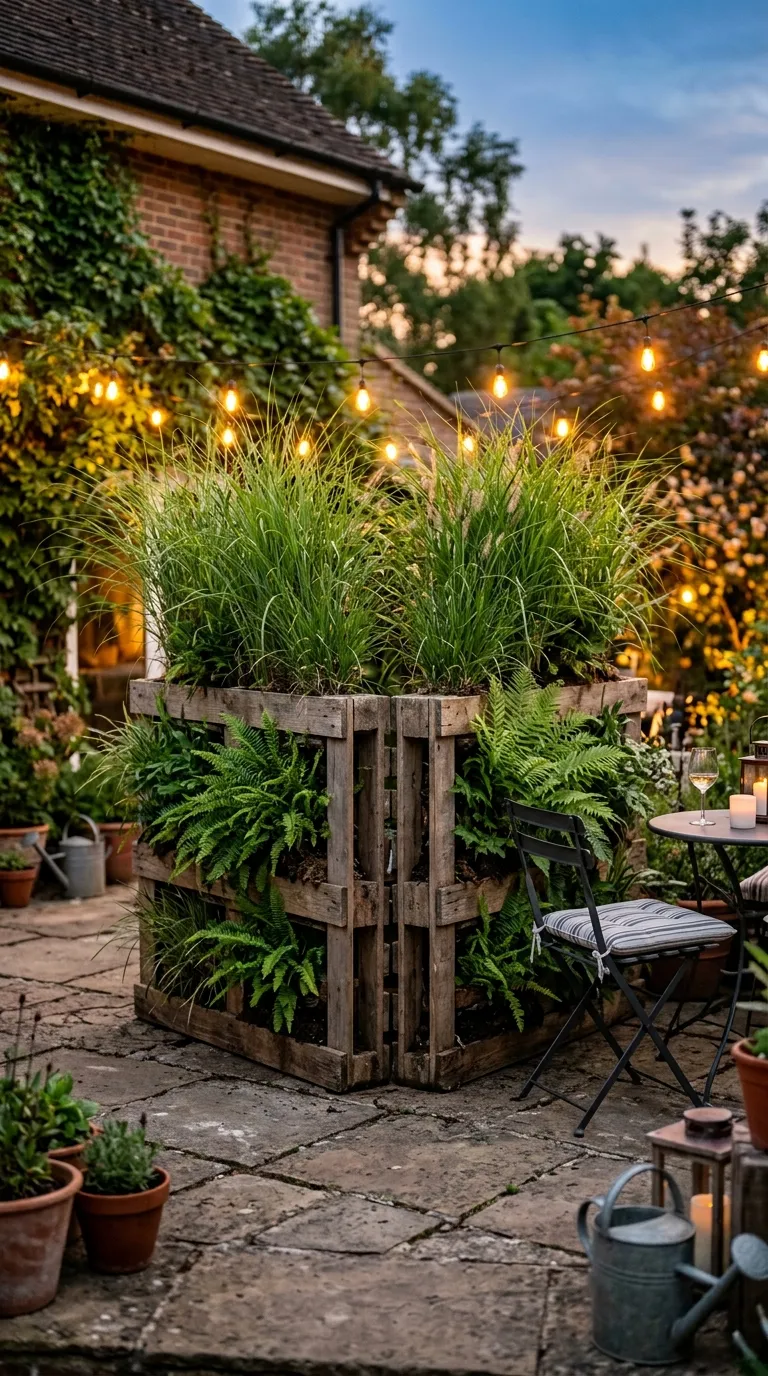
For a true statement piece, the two-pallet standing privacy planter transforms a bare patio corner into a lush green retreat. You will need two pallets of equal size, long wood screws, landscape fabric, soil, and tall plants such as ornamental grasses, ferns, or even dwarf bamboo. The build time is about four hours, and the difficulty is moderate to advanced because of the structural joinery. Stand the two pallets side by side at a slight angle to form a freestanding V shape, screw them together at the top and bottom, line the interior with fabric, and plant heavily along the top opening. As plants mature, the structure becomes a dense leafy wall that feels like a natural room divider. This is one of the most rewarding DIY garden vertical pallet planter ideas for anyone wanting privacy without building a fence. Place a bistro chair nearby and a string of warm patio lights overhead for instant ambiance. A final tip is to add a few caster wheels to the base if you want the option to move it with the seasons.
Each of these projects proves that a humble wooden pallet can become a charming, functional, and affordable focal point in any garden. The beauty of working with pallets is their flexibility; you can adapt size, color, plant choice, and styling to suit your space and your personality. Whether you are starting a windowsill herb garden, building a privacy screen, or creating a magical spot for your kids, there is a vertical pallet planter waiting to be made. Pick the idea that excites you most, gather your materials, and give yourself a relaxed weekend afternoon to build. Once you see the first green leaves unfurling from the slats, you will understand why so many gardeners are falling in love with vertical pallet planting.
Are pallets safe to use for edible plants?
Pallets can be safe for edible plants, but only if they are marked with the codes HT (heat-treated) or DB (debarked). Avoid pallets stamped MB, which indicates chemical treatment. When in doubt, line the interior with food-safe landscape fabric and stick to organic soil.
How long does a pallet planter usually last outdoors?
A well-built pallet planter typically lasts three to five years, depending on the climate and whether the wood is sealed. Applying an exterior-grade sealer every year or two extends the life considerably.
Do pallet planters need drainage holes?
Yes, drainage is essential. Leave small gaps in the landscape fabric at the bottom of each slat row, and tilt the pallet slightly forward when mounting so excess water can escape rather than pool.
What plants grow best in a vertical pallet planter?
Herbs, succulents, salad greens, strawberries, and trailing annuals all perform beautifully. The key is choosing plants with relatively shallow root systems that tolerate the unique microclimate of a vertical planter.
How much soil does a vertical pallet planter hold?
A single standard pallet planter holds roughly forty to sixty liters of soil, depending on how tightly you pack it. Mixing in perlite or coconut coir lightens the load and improves drainage.
Can I move my pallet planter once it is planted?
It is best to move the pallet before planting since a fully planted pallet can weigh thirty kilograms or more. If you must move it later, lay it flat and slide it on a piece of plywood rather than dragging it.
How often should I water a vertical pallet planter?
Most vertical pallet planters need watering every one to three days during warm weather. Stick a finger into the soil to check moisture; if the top inch feels dry, it is time to water.