Old wooden ladders carry a distinct history etched into their worn rungs, paint-splattered steps, and weathered grain. Instead of relegating an obsolete stepladder or orchard ladder to the back of the garage or the landfill, repurposing it into home decor offers a sustainable, budget-friendly way to add character to your living space.
Combining the practical utility of a bookshelf with the vibrant life of a multi-tier plant stand, an upcycled ladder brings vertical interest to any room. Whether your aesthetic leans toward modern minimalism, rustic farmhouse, or industrial chic, here are 10 creative ways to transform vintage ladders into functional bookshelves and botanical displays.
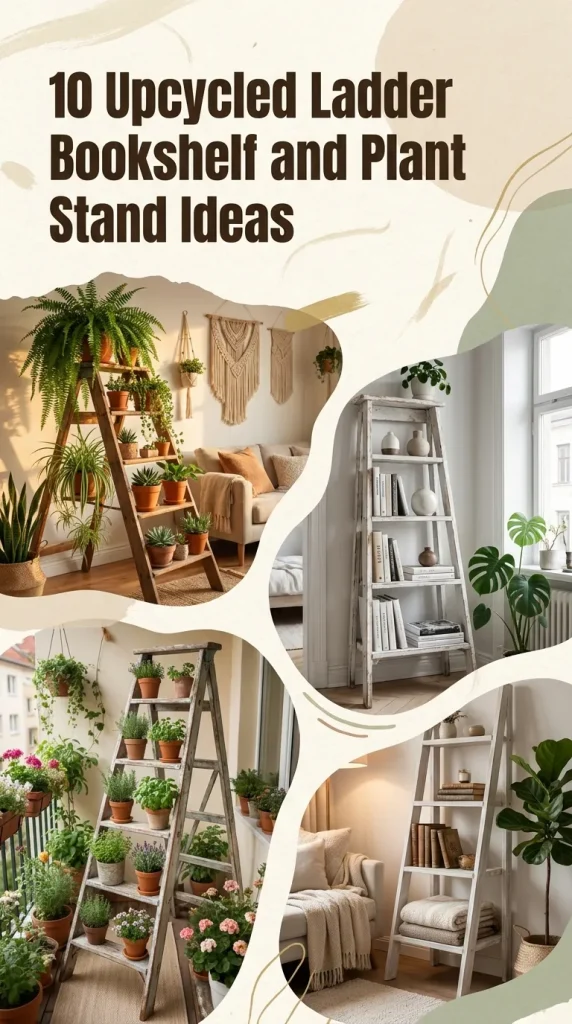
1. The Classic A-Frame Double-Plank Shelf
The traditional wooden A-frame stepladder is naturally designed for balance, making it the perfect foundation for a tiered storage system. By opening the ladder fully and extending reclaimed wooden planks across matching rungs on both sides, you create wide, sturdy horizontal surfaces.
- How to Style: Place heavier, hardcover books on the lower, wider planks to anchor the unit visually and physically. Dedicate the upper rungs to cascading trailing plants such as English Ivy or String of Pearls, allowing their vines to drape naturally over the edges of the wood.
- Pro Tip: Secure the horizontal planks underneath with small metal L-brackets to prevent any wobbling when watering plants or grabbing books.
2. The Leaning Orchard Ladder Wall Display
Tapered orchard ladders, which narrow toward the top, offer a sleek vertical footprint ideal for smaller apartments or narrow hallways. Leaning the ladder gently against an accent wall creates an open, airy silhouette without dominating floor space.
- How to Style: Use the upper rungs as magazine racks or open-book rests by draping books over the rungs at their spine. On the middle rungs, attach lightweight S-hooks to hang small potted succulents in macramé holders.
- Pro Tip: Anchor the top of the leaning ladder into wall studs using discreet mounting brackets and add rubber pads to the ladder feet to protect your floors.

3. The Corner Stepladder Plant Cascade
Unused corners often become dead zones in interior design. A small, three-to-four-step wooden utility ladder fits neatly into a 90-degree corner, turning an empty nook into a lush focal point.
- How to Style: Treat each step as a mini-pedestal. Alternate between a stack of two or three favorite novels and a statement plant, such as a Snake Plant (Sansevieria) on the bottom step and a leafy Pothos on top to draw the eye upward.
- Pro Tip: Paint the ladder in a bold accent color—such as deep forest green, terracotta, or matte navy—to contrast brightly against neutral walls and foliage.

4. The Suspended Ceiling Hanging Garden & Book Nook
For a bold architectural statement, suspend a sturdy vintage ladder horizontally from the ceiling using heavy-duty eye bolts and metal chains or rustic nautical rope.
- How to Style: The rungs become overhead supports for an aerial garden. Hang a cluster of terrariums, air plants, and trailing pothos vines that weave through the framework. Place a low bench or reading chair directly underneath with a small side basket for books to create a dedicated reading sanctuary.
- Pro Tip: Always screw ceiling anchors directly into structural ceiling joists and verify the safe load capacity before hanging heavy terracotta pots.

5. The Farmhouse Distressed White Ladder with Wire Baskets
A rustic, country-inspired home benefits from textured, weathered finishes. A vintage wooden ladder given a distressed chalk paint treatment pairs seamlessly with vintage metal accents.
- How to Style: Mount shallow galvanized wire or chicken-wire baskets to each rung. These baskets serve as tidy holders for vintage paperbacks, notebooks, or gardening guides. Tuck small potted herbs, such as rosemary and thyme, right beside the books to introduce fragrance alongside visual texture.
- Pro Tip: Lightly sand the edges and corners after applying chalk paint to highlight the natural wear points of the wood.

6. The Symmetrical Twin-Ladder Library Bridge
If you have ample wall space and an extensive collection of books and plants, two matching A-frame ladders can be joined to form a grand, library-style shelving unit.
- How to Style: Position two ladders roughly four to six feet apart. Run long, thick scaffolding planks through the rungs of both ladders to connect them seamlessly. This creates a multi-tiered bridge with substantial surface area capable of holding dozens of books, decorative ceramics, and large potted foliage like Monsteras or Fiddle-Leaf Figs.
- Pro Tip: Ensure your bridging boards are at least 1.5 inches thick to avoid sagging under the combined weight of heavy books and ceramic planters.

7. The Horizontal Wall-Mounted Floating Bookshelf
Mounting a single straight extension ladder horizontally against a wall turns its rungs into natural vertical book dividers and miniature cubbies.
- How to Style: Slide books vertically between each rung, using the steps as built-in bookends. Place small, lightweight potted plants—like mini cacti or trailing ferns in flat-backed wall planters—along the top rail for an integrated burst of greenery.
- Pro Tip: Use heavy-duty wall anchors and spirit levels during installation to ensure the ladder sits flush and perfectly level.

8. The Industrial Pipe & Reclaimed Wood Fusion
Combine raw timber with modern industrial elements by marrying an old ladder frame with dark iron plumbing pipes and fittings.
- How to Style: Use matte black metal pipes to support and expand the shelves, threading pipes through the rungs to extend the display outward. This provides a striking contrast between the warmth of weathered timber and the cool finish of industrial metal, pairing well with leather-bound volumes, brass reading lamps, and architectural succulents like Aloe Vera.
- Pro Tip: Clean vintage metal pipes with mineral spirits and coat them in a matte clear sealer to prevent rust transfer onto book covers.

9. The Minimalist Nordic Ladder with Leather Straps
Scandinavian design emphasizes clean lines, functional beauty, and warm organic textures. A light-toned, sanded ladder suspended vertically with thick leather straps adds understated sophistication.
- How to Style: Keep the layout uncluttered. Reserve lower steps for neatly curated stacks of art books and coffee-table journals. Use upper steps for minimal ceramic pots containing architectural plants, such as a single ZZ plant or a sculptural Peace Lily.
- Pro Tip: Treat the natural wood with a clear matte sealant or light white-wash wax to preserve the pale, modern Scandinavian finish.

10. The Indoor-Outdoor Tiered Herb & Reading Garden
Positioned in a sunroom, covered patio, or near a bright bay window, a weathered exterior ladder creates a seamless transition between your garden and living space.
- How to Style: Dedicate the sunniest side of the ladder to culinary herbs, flowering begonias, and ferns, while keeping the shaded under-shelves stocked with gardening journals, botany guides, and leisure reading in moisture-resistant baskets.
- Pro Tip: Apply an exterior-grade waterproof sealant or spar varnish to the ladder to protect both the wood and your books from moisture, condensation, and sunlight exposure.

Best Practices for Upcycling Ladders
Before loading an upcycled ladder with books and plants, follow these essential preparation steps:
- Clean and Sand: Wash away years of dust and grime with warm soapy water. Lightly sand rough edges to prevent splinters while preserving the authentic aged patina.
- Moisture Protection: Always use plant saucers, drip trays, or sealed cachepots beneath your plants. Standing water will warp the wood and ruin paper book pages.
- Weight Distribution: Always place the heaviest book collections and substantial ceramic planters on the lowest tiers to maintain a stable center of gravity.
- Safety Anchoring: Secure leaning and freestanding ladders to wall studs with furniture safety straps, particularly in homes with children or active pets.