Creating a lush, vibrant yard does not have to mean spending every weekend dragging hoses, pulling weeds, or applying endless fertilizers. A low-maintenance landscape allows homeowners to enjoy outdoor living without the tedious upkeep. By choosing resilient, perennial plants that naturally thrive in varied conditions, you can establish a stunning garden that practically cares for itself.
Whether dealing with blazing summer sun, nutrient-poor soil, or deep shady patches, selecting plants known for drought tolerance, pest resistance, and hardiness is key. Here are 10 exceptional low-maintenance plant ideas to transform your yard into a self-sustaining paradise.
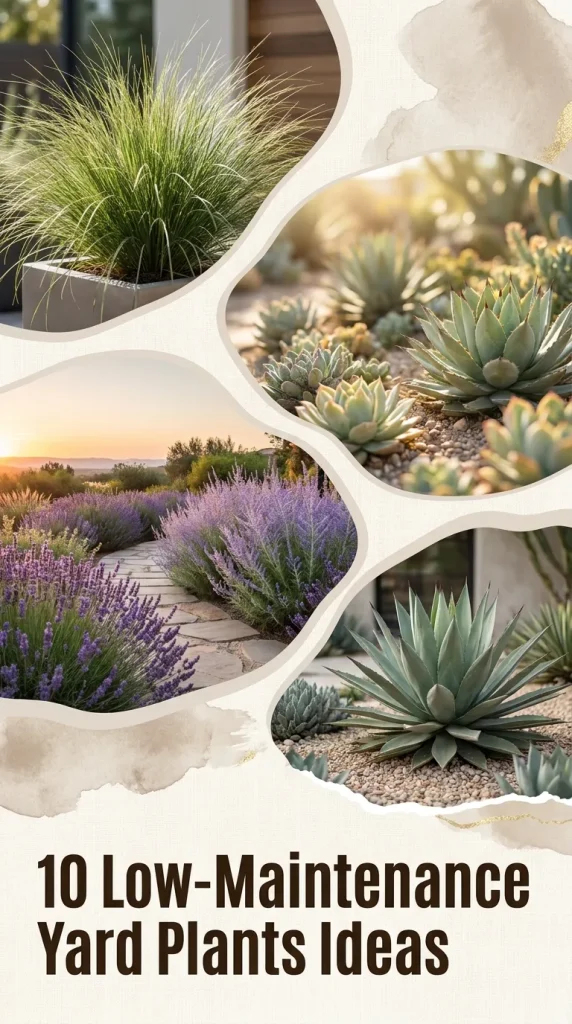
1. Hostas (Hosta spp.)
Best suited for shaded or partially shaded yards, hostas are beloved for their bold, colorful foliage. Ranging from bright chartreuse and deep blue-green to striking variegated patterns, these perennials offer ground-covering foliage that suppresses weeds naturally.
- Light Requirements: Partial to full shade
- Watering Needs: Moderate; moisture-retentive, well-draining soil
- Key Benefit: Requires minimal pruning and returns reliably every spring.
Once established, hostas need very little attention outside of occasional watering during severe dry spells. Their broad leaves effectively shade out competing weeds, making them an ideal pick for under trees or along shaded borders.

2. Lavender (Lavandula)
For sunny locations with dry or rocky soil, lavender provides fragrance, silvery foliage, and vibrant purple blooms. Highly drought-tolerant once established, lavender thrives in conditions where other plants struggle.
- Light Requirements: Full sun
- Watering Needs: Low; highly drought-tolerant
- Key Benefit: Deer-resistant and attracts beneficial pollinators like bees and butterflies.
Lavender requires sharp drainage and infrequent watering. A light pruning in late spring or after blooming is all it takes to keep the plant bushy and prevent woodiness.

3. Sedum / Stonecrop (Sedum spp.)
Sedums are fleshy succulents designed by nature to store water in their foliage, making them virtually impervious to heat and drought. Available in creeping groundcover styles or tall, upright varieties like ‘Autumn Joy’, sedums provide vibrant late-season color when many other flowers fade.
- Light Requirements: Full sun to partial shade
- Watering Needs: Low
- Key Benefit: Exceptional drought resistance and minimal nutrient requirements.
Sedums thrive in poor, sandy, or gravelly soils. They require no deadheading, suffer from few pests, and hold structural interest throughout the winter months.

4. Daylilies (Hemerocallis)
Often called the ultimate low-maintenance perennial, daylilies are famous for their tough nature. They grow in almost any soil type, tolerate heat, pollution, and drought, and produce colorful blooms from late spring through late summer depending on the variety.
- Light Requirements: Full sun to partial shade
- Watering Needs: Low to moderate
- Key Benefit: Adaptable to poor soil, erosion control on slopes.
Daylilies form dense foliage clumps that choke out weeds. Dividing them every few years is optional, making them a hassle-free addition to garden beds and borders.

5. Feather Reed Grass (Calamagrostis × acutiflora ‘Karl Foerster’)
Ornamental grasses add vertical structure, movement, and soft texture to landscaping with almost zero ongoing effort. ‘Karl Foerster’ feather reed grass features slender, upright green blades topped with golden-wheat blooms that sway gracefully in the breeze.
- Light Requirements: Full sun
- Watering Needs: Low to moderate
- Key Benefit: Deer-resistant and provides year-round visual interest.
Maintenance is simple: cut the dead foliage back to near ground level once per year in late winter before new spring growth emerges.

6. Purple Coneflower (Echinacea purpurea)
A classic native perennial, the purple coneflower is built to withstand extreme heat, cold, and dry conditions. Featuring bold daisy-like blooms with prominent central cones, coneflowers bloom continuously throughout the summer months.
- Light Requirements: Full sun
- Watering Needs: Low; deep root system resists drought
- Key Benefit: Attracts pollinators in summer and seed-eating birds like goldfinches in fall.
Coneflowers do not require deadheading, though doing so encourages more blooms. Leaving seed heads intact through winter offers natural bird food and cold-season interest.

7. Russian Sage (Salvia yangii)
Russian sage produces clouds of tiny, lavender-blue flowers above silvery-gray aromatic stems. Growing between three to five feet tall, it creates a striking backdrop in sunny flower beds while requiring almost no intervention.
- Light Requirements: Full sun
- Watering Needs: Very low once established
- Key Benefit: Exceptionally heat-tolerant and ignored by deer and rabbits.
This plant thrives in hot, dry climates and poor soil. Cut it back to a few inches tall in early spring to stimulate vigorous new stems.

8. Peonies (Paeonia)
Peonies are famous for being long-lived plants that can survive for decades with minimal maintenance. Known for large, fragrant blossoms in shades of pink, white, red, and coral, peonies make a high-impact statement every spring.
- Light Requirements: Full sun to light shade
- Watering Needs: Moderate
- Key Benefit: Extremely long lifespan; resistant to pests and diseases.
Once planted in a suitable spot with good drainage, peonies dislike being moved and actually prefer to be left alone to mature.

9. Creeping Phlox (Phlox subulata)
Creeping phlox is a low-growing evergreen ground cover that forms a dense mat of needle-like foliage. In early spring, it transforms into a blanket of vibrant pink, purple, or white flowers.
- Light Requirements: Full sun
- Watering Needs: Low to moderate
- Key Benefit: Excellent for rock gardens, slopes, and smothering weeds.
Creeping phlox stays green year-round in many climates, preventing soil erosion on slopes while requiring little to no supplemental watering once established.

10. Yucca (Yucca filamentosa)
For a dramatic, architectural accent, yucca offers stiff, sword-like leaves topped by tall spikes of creamy white bell-shaped flowers in midsummer. Yucca thrives in conditions where most other ornamental plants would wither.
- Light Requirements: Full sun
- Watering Needs: Extremely low
- Key Benefit: Severe drought, salt, and heat tolerance.
Yucca thrives in poor, sandy soil and requires no watering once rooted. Its sharp leaves make it a great protective plant along property lines.

Designing for Success with Low-Maintenance Plants
To maximize efficiency and reduce yard chores to the bare minimum:
- Group Plants by Need: Place drought-tolerant plants together (hydrozoning) so you don’t overwater xeriscape species while tending to thirstier varieties.
- Apply Organic Mulch: Maintain a 2 to 3-inch layer of shredded bark mulch around beds. Mulch retains soil moisture, regulates root temperature, and suppresses weeds.
- Install Drip Irrigation: If watering is needed, set up drip lines on an automated timer to deliver moisture directly to roots with zero water waste.
By combining these hardy plant choices with smart landscaping practices, you can cultivate an attractive garden that thrives with minimal effort year after year.